Website performance has become one of the most important factors in modern SEO and user experience. A fast-loading website not only keeps visitors engaged but also helps improve search visibility, conversion rates, and overall site performance. While many website owners focus on keywords and content, they often overlook a critical factor that directly impacts loading speed: page size.
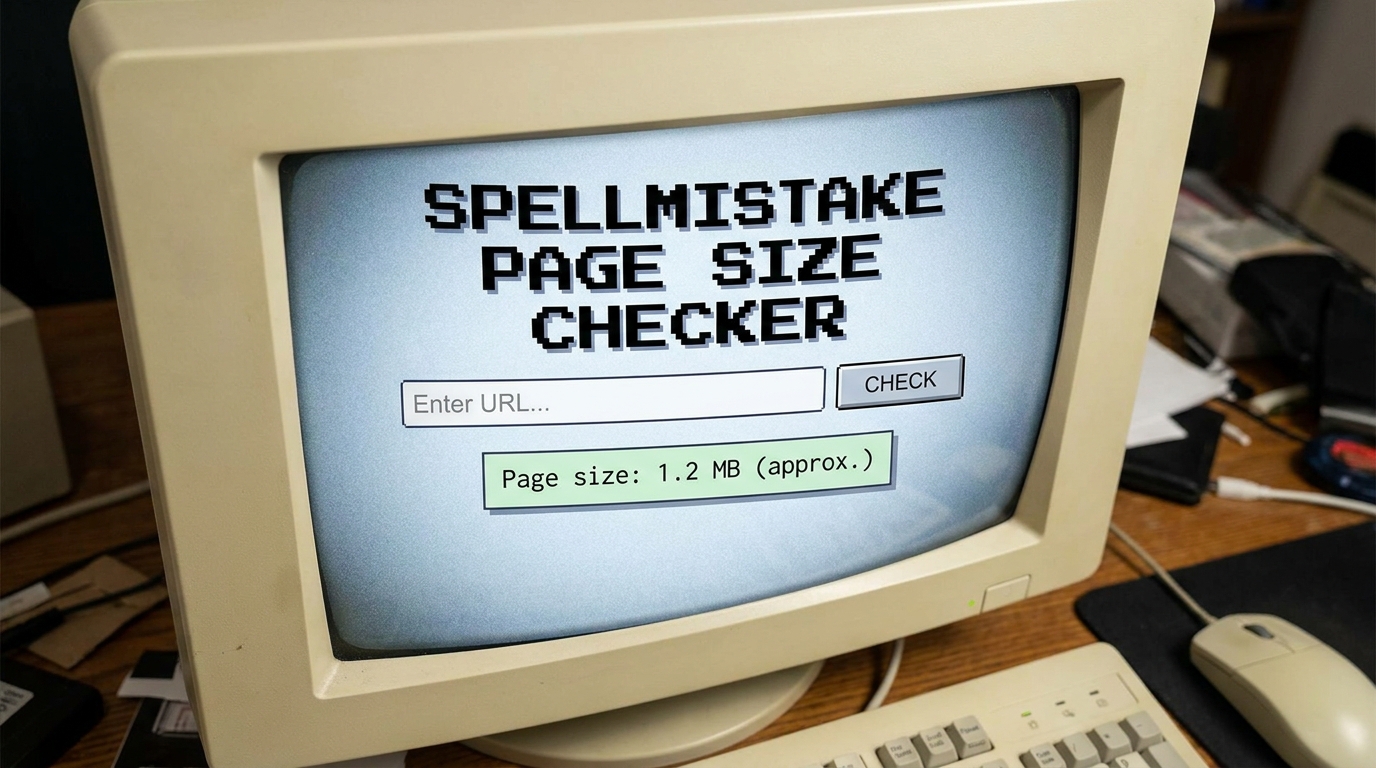
This is where Page Size Checker by SpellMistake becomes useful. The tool helps website owners, bloggers, SEO specialists, marketers, and developers understand how much data a webpage contains and whether that size could be affecting performance.
A webpage is made up of multiple elements, including HTML, CSS, JavaScript, images, videos, fonts, and third-party resources. When these elements become too large or poorly optimized, they can slow down the entire website. Understanding page size is the first step toward creating a faster and more efficient online experience.
In this guide, you’ll learn how Page Size Checker by SpellMistake works, why page size matters for SEO, what metrics you should monitor, common performance problems, and proven strategies to improve website speed without sacrificing quality.
What Is Page Size Checker by SpellMistake and How Does It Work?
Page Size Checker by SpellMistake is an online website performance tool designed to calculate the total size of a webpage. Instead of simply displaying a number, it provides valuable insight into how much data users must download when visiting a page.
Every webpage contains multiple resources that contribute to its overall size. These include:
- HTML files
- CSS stylesheets
- JavaScript files
- Images
- Fonts
- Embedded media
- Third-party scripts
- Tracking codes
When a visitor opens a webpage, their browser downloads these resources before displaying the content. The larger the page size, the more data needs to be transferred, which can result in slower loading times.
By using Page Size Checker by SpellMistake, website owners can quickly identify whether their pages are lightweight, moderately sized, or unnecessarily large. This information can be extremely valuable during a website audit or performance optimization campaign.
The tool serves as a starting point for understanding how efficiently a website delivers content to users.
Why Website Page Size Matters for SEO, Speed, and User Experience
Page size plays a direct role in website performance. While content quality remains important, users expect websites to load quickly regardless of how valuable the information may be.
A large webpage often creates several challenges:
Slower Loading Times
When users visit a page with excessive resources, browsers require more time to download and process the content.
Poor User Experience
Research consistently shows that visitors are less likely to stay on websites that load slowly. Delays can increase frustration and reduce engagement.
Higher Bounce Rates
Users frequently abandon pages that take too long to appear, especially on mobile devices.
Reduced Conversion Opportunities
Whether you’re selling products, generating leads, or publishing content, slow pages can negatively affect conversions.
SEO Impact
Search engines prioritize user experience. Fast-loading pages generally provide a better experience and may perform more effectively in search results.
For these reasons, page size analysis should be a regular part of any website optimization strategy.
Key Metrics You Should Analyze Beyond Total Page Size
Many website owners focus solely on total page size. While this metric is important, it does not tell the entire story.
A comprehensive website performance analysis should include several additional factors.
Number of Resource Requests
Every file requested by the browser creates additional work. Even a relatively small page can perform poorly if it requires hundreds of requests.
HTML Size
Excessive code can increase loading times and reduce efficiency.
CSS File Size
Large stylesheets often contain unused code that slows rendering.
JavaScript Weight
Heavy JavaScript files can delay page interaction and affect responsiveness.
Image Size
Images are among the most common causes of page bloat.
Third-Party Resources
Advertising networks, analytics tools, social media widgets, and chat systems frequently increase page weight.
Font Loading
Custom fonts may improve design but can also impact website performance.
Evaluating these metrics provides a much clearer picture of how a webpage behaves in real-world situations.
How to Use Page Size Checker by SpellMistake Step by Step
Using the tool is straightforward and requires only a few steps.
Step 1: Enter the Website URL
Copy the webpage URL you want to analyze and paste it into the checker.
Step 2: Start the Analysis
Initiate the scan and allow the tool to evaluate the webpage resources.
Step 3: Review the Results
Analyze the total page size along with any supporting performance information.
Step 4: Identify Problem Areas
Look for oversized images, unnecessary scripts, or excessive resource requests.
Step 5: Implement Optimizations
Apply performance improvements based on the results.
Step 6: Retest Regularly
Performance optimization is not a one-time task. Continuous monitoring helps maintain speed improvements over time.
This process allows website owners to track performance trends and identify issues before they impact users.
What Is an Ideal Page Size for Modern Websites?
One of the most common questions among website owners is whether there is a perfect page size.
The truth is that no universal number exists.
Different websites have different requirements. An eCommerce store, portfolio website, blog, and news platform all serve unique purposes.
However, several principles apply to every website:
- Smaller pages generally load faster.
- Efficient resource management improves user experience.
- Optimized media files reduce bandwidth consumption.
- Minimal resource requests improve performance.
Rather than focusing on a specific size target, website owners should focus on efficiency. Every element included on a page should serve a clear purpose.
A lightweight page that delivers valuable content often outperforms a larger page filled with unnecessary resources.
Common Reasons Your Website Page Size Becomes Too Large
Many websites gradually become larger over time without owners realizing it.
Several factors contribute to page size growth.
Unoptimized Images
Large image files remain one of the biggest causes of slow websites.
Excessive JavaScript
Plugins, themes, and third-party tools frequently add unnecessary scripts.
Multiple CSS Files
Poorly organized stylesheets can increase page weight significantly.
Video Embeds
Embedded videos may improve engagement but can also increase loading requirements.
Advertising Scripts
Advertising networks often introduce additional requests and large resource files.
Third-Party Integrations
Social sharing tools, analytics software, and customer support widgets can add substantial weight.
Poor Theme Design
Some website themes load resources that are never actually used.
Identifying these issues is often the first step toward meaningful optimization.
How Large Page Sizes Affect Google Rankings and Core Web Vitals
Many competing articles discuss page size but fail to explain how it connects to modern search performance metrics.
Google increasingly focuses on user experience signals through Core Web Vitals.
Large page sizes can influence several key metrics.
Check: Innovation News DualMedia The Complete Guide
Largest Contentful Paint (LCP)
Large files often delay the loading of primary page content.
First Contentful Paint (FCP)
Users may wait longer before seeing visible content.
Interaction Readiness
Heavy JavaScript can delay user interactions.
Mobile Performance
Mobile devices often struggle more with large pages compared to desktop systems.
Crawl Efficiency
Search engines allocate resources when crawling websites. Faster pages can help crawlers process content more efficiently.
User Retention
Visitors are more likely to stay engaged when pages load quickly.
By reducing page size, website owners often improve multiple performance indicators simultaneously.
Proven Ways to Reduce Page Size Without Sacrificing Quality
Optimization does not mean removing valuable content. Instead, it focuses on delivering content more efficiently.
The following strategies can significantly reduce page size.
Compress Images
Use modern image formats and appropriate dimensions.
Enable Lazy Loading
Load images and media only when users need them.
Minify CSS and JavaScript
Remove unnecessary characters and code.
Implement Browser Caching
Store resources locally to reduce repeated downloads.
Use a Content Delivery Network (CDN)
Serve content from locations closer to users.
Remove Unused Plugins
Eliminate tools that provide little value.
Optimize Fonts
Limit font variations and unnecessary font files.
Reduce Third-Party Scripts
Evaluate whether external tools genuinely contribute to user experience.
Compress Website Files
Enable Gzip or Brotli compression to reduce transfer size.
Audit Resources Regularly
Routine performance reviews help prevent future page bloat.
These techniques improve loading performance without sacrificing functionality or design quality.
Common Page Size Optimization Mistakes Website Owners Make
Optimization efforts can sometimes produce disappointing results due to avoidable mistakes.
Focusing Only on Homepage Performance
Many website owners test only their homepage while ignoring internal pages.
Ignoring Mobile Users
Mobile visitors often represent the majority of website traffic.
Installing Too Many Plugins
Each plugin may introduce additional scripts, stylesheets, and database queries.
Uploading Original High-Resolution Images
Images intended for professional editing should not be used directly on webpages.
Neglecting Performance Monitoring
Website performance changes over time as content grows.
Chasing Scores Instead of User Experience
Performance metrics are valuable, but user satisfaction should remain the ultimate goal.
Avoiding these mistakes helps create sustainable long-term improvements.
Frequently Asked Questions About Page Size Checker by SpellMistake
Is Page Size Checker by SpellMistake Free to Use?
The availability of free features depends on the platform’s current offering, but the tool is generally designed to provide quick page size analysis.
Why Is My Website Page Size Increasing?
New content, plugins, images, videos, and third-party integrations can all contribute to growth over time.
Does Page Size Affect SEO?
Page size itself is not a direct ranking factor, but it influences loading speed, user experience, and Core Web Vitals, which can impact SEO performance.
How Often Should I Check My Website’s Page Size?
Website owners should perform regular audits, especially after major updates or content additions.
Can Small Websites Have Performance Issues?
Yes. Even relatively small websites can experience slow loading times if resources are poorly optimized.
Final Thoughts: Is Page Size Checker by SpellMistake Worth Using for SEO?
Page Size Checker by SpellMistake is a practical tool for anyone who wants to understand and improve website performance. Whether you manage a blog, business website, online store, or content platform, monitoring page size can reveal opportunities to enhance loading speed and user experience.
The most successful websites today are not necessarily the ones with the most features. They are the ones that deliver content quickly, efficiently, and consistently across all devices.
By combining page size analysis with image optimization, resource management, browser caching, lazy loading, and regular performance audits, website owners can create faster experiences that benefit both users and search engines.
In an increasingly competitive digital environment, understanding your website’s page size is no longer optional. It is a fundamental part of building a faster, more efficient, and more SEO-friendly website.